Symptoms of a Bad and Failing AC Compressor
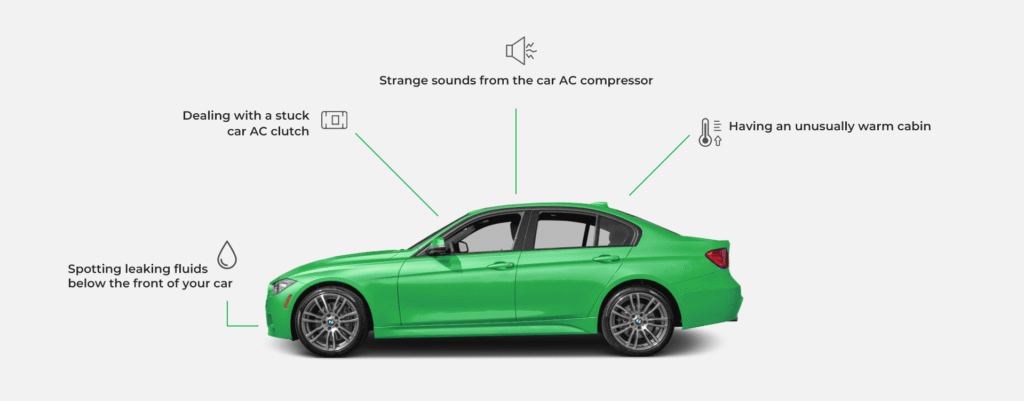
AC System Blows Moderate or Hot Air
If your car’s AC is set to maximum cooling but you’re not feeling a difference in temperature, or if the temperature seems to be rising, it’s possible that the AC compressor is malfunctioning.
Compressor Clutch is Not Moving
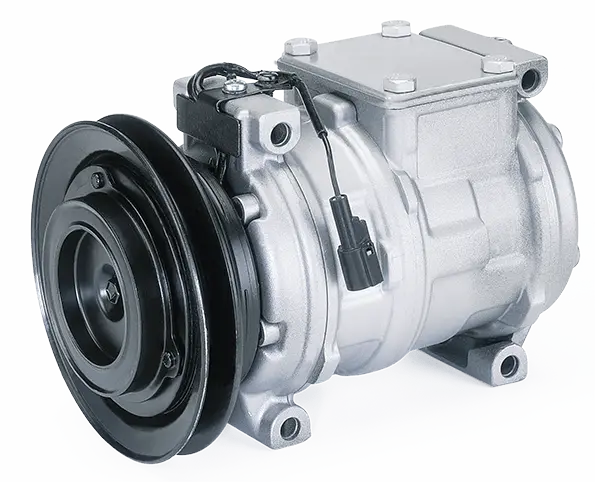
The compressor clutch engages and disengages the compressor with the pulley, allowing it to turn on or off as needed. If this clutch fails, it can prevent the compressor from functioning properly. This issue could indicate a faulty AC compressor clutch or a problem with the compressor itself.
Unusual Noises with the AC Engaged
A grinding or rattling noise coming from the engine bay when the AC is on could be a sign of a failing compressor. This may be due to worn internal components, such as bearings or other metallic parts.
Refrigerant Leaks
O-rings and seals within the compressor can develop leaks over time, causing refrigerant to escape from the AC system. These leaks can be difficult to detect without professional equipment or the presence of refrigerant dye.
Excessive Wear on the Auxiliary Drive Belt
If your auxiliary drive belt is wearing out too quickly or making a screeching noise, it could be due to issues with the AC compressor pulley. Worn bearings in the pulley can cause it to spin at irregular angles, leading to accelerated wear on the belt.
Smell of Burning Rubber
A burning rubber smell coming from the engine compartment when the AC is turned on might indicate a seized AC compressor. In this case, the serpentine belt may not be able to move freely on the compressor pulley, potentially leading to further damage.
Diagnosing a Bad AC Compressor
To accurately diagnose a bad AC compressor, it’s essential to use a pair of manifold gauges that measure the pressure levels in the system. Comparing these pressure readings to the manufacturer’s specifications can help identify issues with the compressor.
If the compressor is seized or the clutch is not engaging, the AC system’s pressures will not rise above the static (engine off) pressure readings. To determine if the compressor is seized, try turning the compressor clutch (attached to the compressor shaft) by hand without removing the drive belt. If it’s difficult to turn or doesn’t turn at all, the compressor may have an internal failure.
AC Compressor Replacement Process
Step 1: Locate the AC Compressor
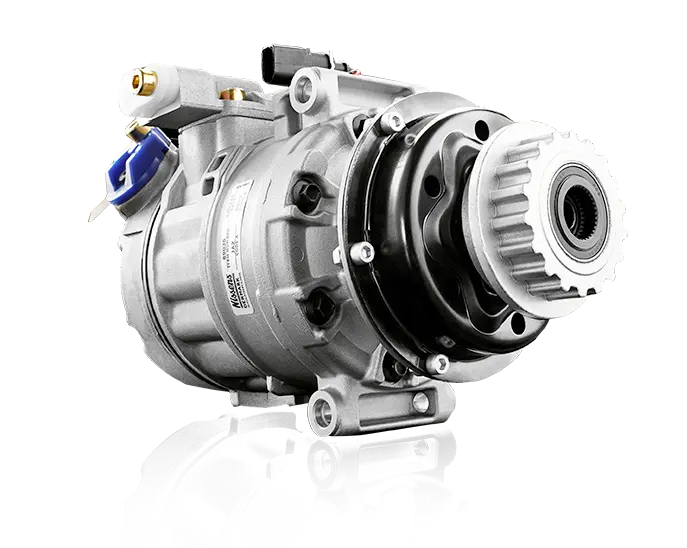
The AC compressor is typically located at the front of the engine, along with other belt-driven accessories. It will be connected to the engine via a drive belt and have an electrical plug, as well as two refrigerant lines attached to its body.
Step 2: Recover the Refrigerant
Before servicing the AC system, a professional must recover the refrigerant using an evacuation machine. This step is crucial to prevent the release of refrigerant into the atmosphere.
Step 3: Remove the Serpentine Belt
To access the AC compressor, you’ll need to remove the serpentine belt that drives it. Locate the belt tensioner and use a wrench or socket to release the tension, allowing the belt to slide off the pulleys.
Step 4: Disconnect Electrical Connectors and Refrigerant Lines
Carefully disconnect the electrical connectors and refrigerant lines from the compressor. Be sure to plug the lines to prevent system contamination.
Step 5: Remove the AC Compressor Mounting Bolts
Using a wrench or socket, remove the mounting bolts that secure the compressor to the engine.
Step 6: Remove the Old Compressor and Install the New One
Carefully remove the old compressor from the vehicle and compare it to the new one to ensure compatibility. Prepare the new compressor by adding the recommended amount of lubricant (usually around ½ ounce) and replacing the o-rings on the pressure lines. Lower the new compressor into place and secure it with the mounting bolts.
Step 7: Reconnect Electrical Connectors and Refrigerant Lines
Reattach the electrical connectors and refrigerant lines to the new compressor.
Step 8: Install the Serpentine Belt
Position the serpentine belt on the pulleys, following the belt routing diagram. Release the tensioner and allow the belt to settle into place.
Step 9: Recharge the AC System
Have a professional recharge the AC system to ensure it’s correctly filled and functioning.
Is It Safe to Drive with a Bad AC Compressor?
In most cases, it is safe to drive with a bad AC compressor, as your car will still run without the AC. However, if the compressor clutch or pulley is damaged, it could cause problems with the serpentine belt, potentially leaving you stranded.
How Long Does an AC Compressor Last?
AC compressors typically last between 10-12 years or 150,000 to 200,000 miles, but they can last the entire life of the vehicle with proper maintenance.
In conclusion, understanding the signs of a failing AC compressor and knowing the costs involved in its replacement can help you make informed decisions about your car’s AC system.